Carver's Cranberry Crews Wade Into the Last Weeks of Harvest
BulletinMassachusetts cranberry growers are gathering the final barrels of the autumn crop at flooded bogs across Carver and neighboring towns.
- 1854year A.D. Makepeace was founded
- 1,800acres farmed by A.D. Makepeace
- 450barrels held by waiting transport trucks
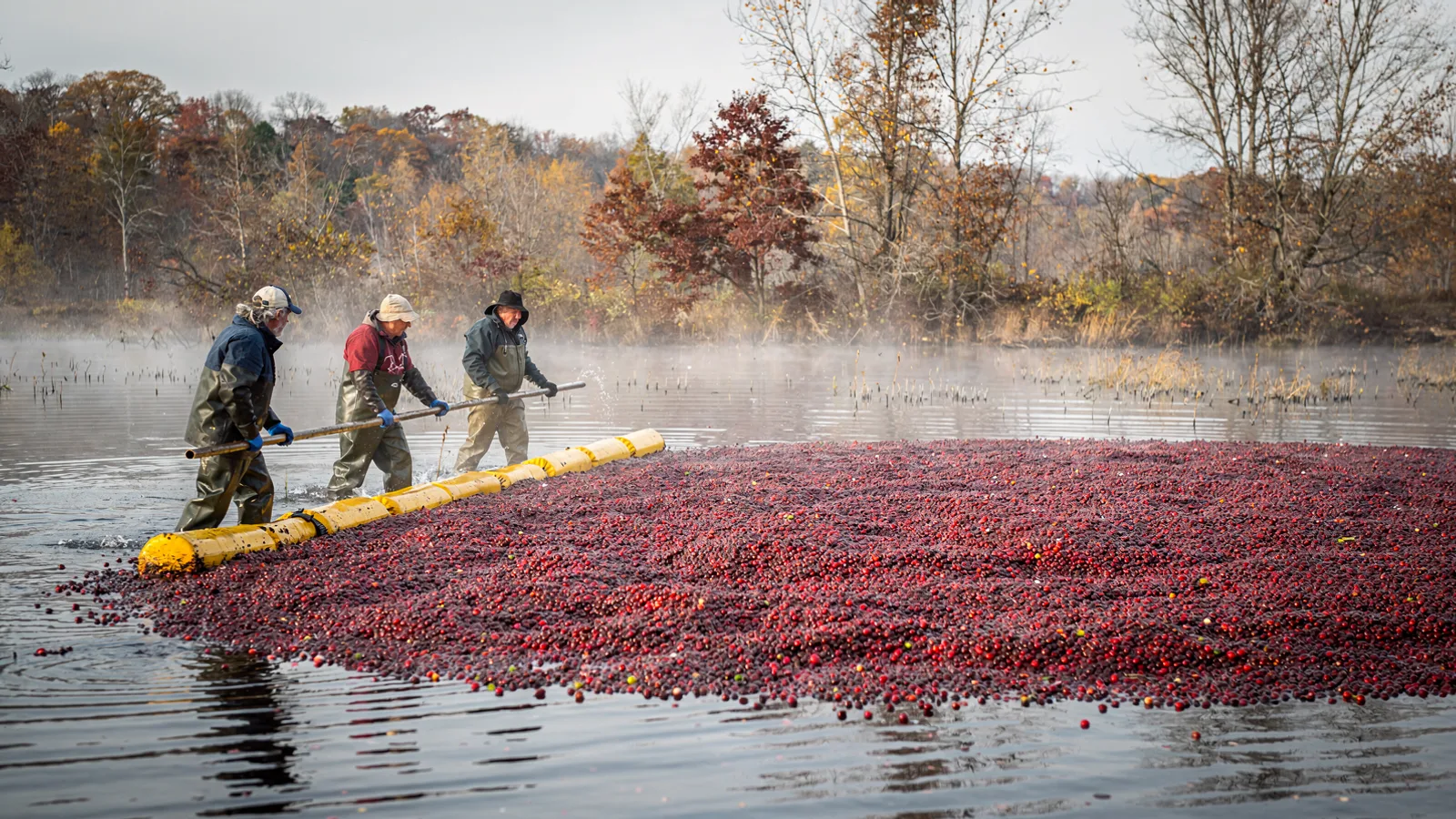
Crews in waist-high waders are working through flooded fields at Big North Bog in Carver, Massachusetts, corralling crimson fruit as the state cranberry harvest enters its final weeks of autumn gathering.
CARVER, Mass. (Stratosyn) · At Big North Bog in Carver, harvesting machines equipped with rotating tines move across flooded waters to knock ripe berries from submerged vines. Workers wearing waist-high waders guide long plastic booms across the surface to corral the floating fruit into tight circles, where pumps siphon the crop into trucks that hold up to 450 barrels.
The statewide harvest began in mid-September and continues into the first or second week of November. Cool autumn nights paired with sunny daytime hours turn the fruit deep red, following a color change similar to fall foliage.
Historic Growing Grounds
A.D. Makepeace, founded in 1854 by Abel Denison Makepeace, operates the Carver acreage and stands as the largest cranberry grower in the world. The agricultural company cultivates about 1,800 acres of bogs across Plymouth, Carver and Wareham, having opened its seasonal harvest operations on Sept. 14.
Among the varieties harvested at the bog is the Mullica Queen, a type recognized for berries that are redder and larger than average. Across the nation, Wisconsin produces more cranberries than any other state, maintaining approximately 25,000 acres of commercial beds.
Seasonal Care and Agritourism
Growers expect a good crop this season, according to Karen Cahill of the Cape Cod Cranberry Growers' Association. Rainfall from a Nor'easter helped replenish local reservoirs, supplying water that farmers use to flood bogs and run protective irrigation systems on frosty nights.
The autumn harvest period also supports regional agritourism, welcoming curious visitors directly into the working agricultural landscape. Through these educational programs, members of the public can put on rubber waders and step into the flooded bogs to watch the corralling process firsthand.
This bulletin is based on reporting and materials from The Boston Globe, rewritten in our own words.